
Why Train Differently?
Adopting an inter-disciplinary approach to technical/physical/mental development

Yesterday I posted a somewhat-nebulous thread on Twitter, regarding the complex relationship between technical, physical and mental development.

These thoughts were informed by my personal experiences (both as an athlete and a coach), but also by pro-level case studies I’ve come across over the years.
One of the most interesting practitioners currently working is Gavin MacMillan. The Canadian played minor hockey alongside future NHLers, but wound up competing in tennis at the NCAA and professional levels. After founding the Sports Science Lab in 2001, MacMillan trained NFL prospects to increase their speed and explosiveness. More recently, he helped multiple professional tennis players (Brandon Nakashima, Aryna Sabalenka & now Coco Gauff) revamp their biomechanics in a sport where it’s notoriously difficult to make technical changes.
I encourage every hockey player, parent, coach and trainer to examine MacMillan’s approach. Perhaps you’ll find an idea that’ll help you overcome a persistent pain point (figuratively or literally).
Podcast Episode 1
6:15 – MacMillan’s athletic background (as a kid he played seven sports, which included ballet and figure skating), and how he got into sports performance coaching
12:30 – MacMillan’s experience with traditional barbell weight training, and how he ended up going away from these methods in his practice
21:15 – How MacMillan was able to drastically reduce injury rates for a pro rugby team, which then went out to have its most successful season in history
Podcast Episode 2
0:22 – MacMillan’s personal experience with getting his natural athleticism coached out of him (technical → physical)
5:17 – How MacMillan helped Aryna Sabalenka stop choking (mental → technical), and why the non-hitting arm’s action is actually the most important yet overlooked factor to hitting a powerful, consistent serve
As an aside, below is the difference between Coco Gauff serving well:
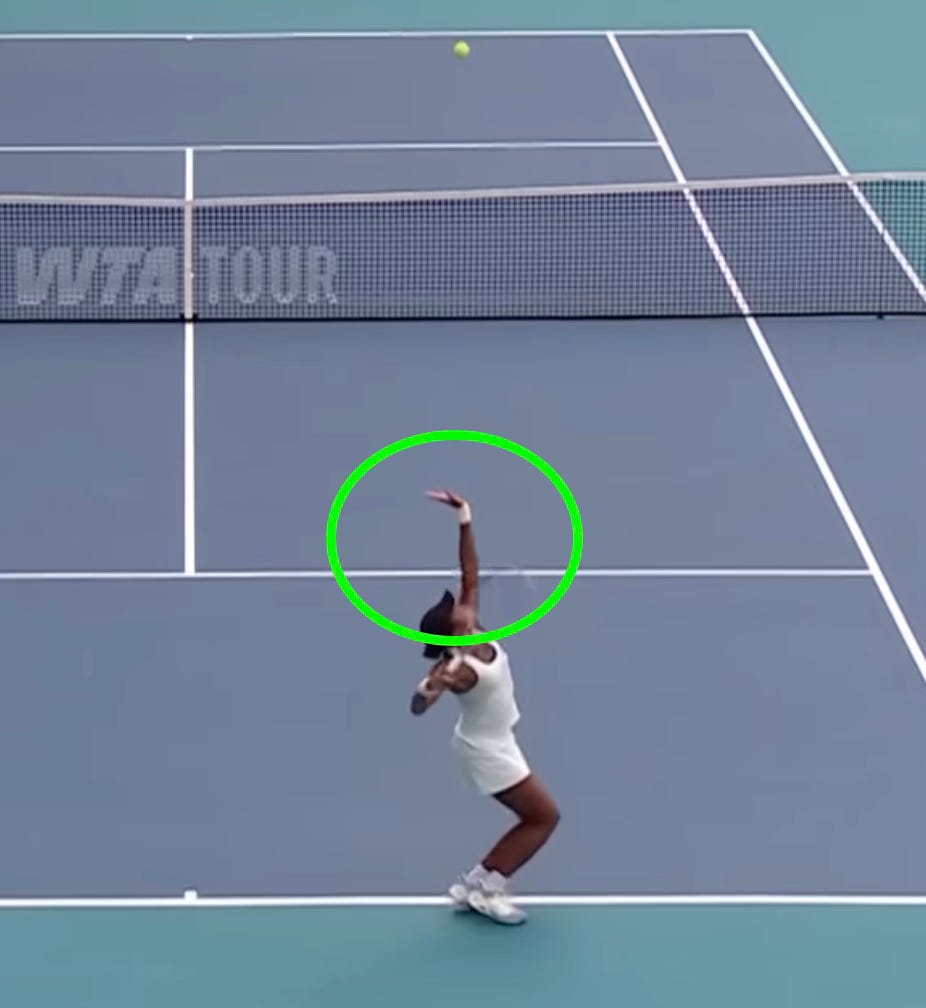
Left arm up, with the arm rotated inward (causing her fingers to point toward the left); entire body aligned and ready to push up.
And serving not so well:
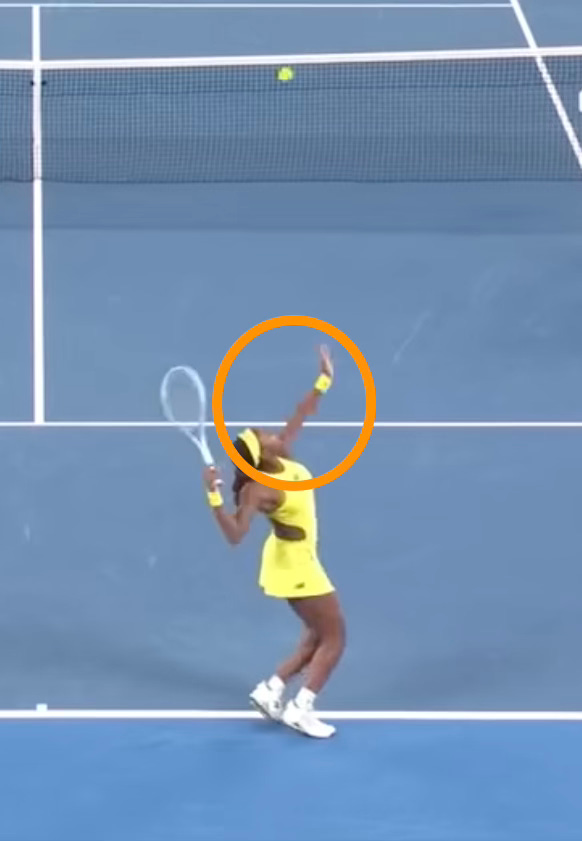
Left arm falling down, fingers pointing ahead or to the right, losing body alignment and causing timing issues.
Poor positioning of the non-hitting arm affects everything else due to the spine connecting all limbs. Consequently we now see her hitting arm, hips and feet in less optimal positions relative to the previous image.
The same fundamental movement principles apply to all sports.
Making a significant and lasting change requires hockey players, coaches and parents to look beyond the obvious.